
Matting Hurts: What Every Cat Owner Should Know
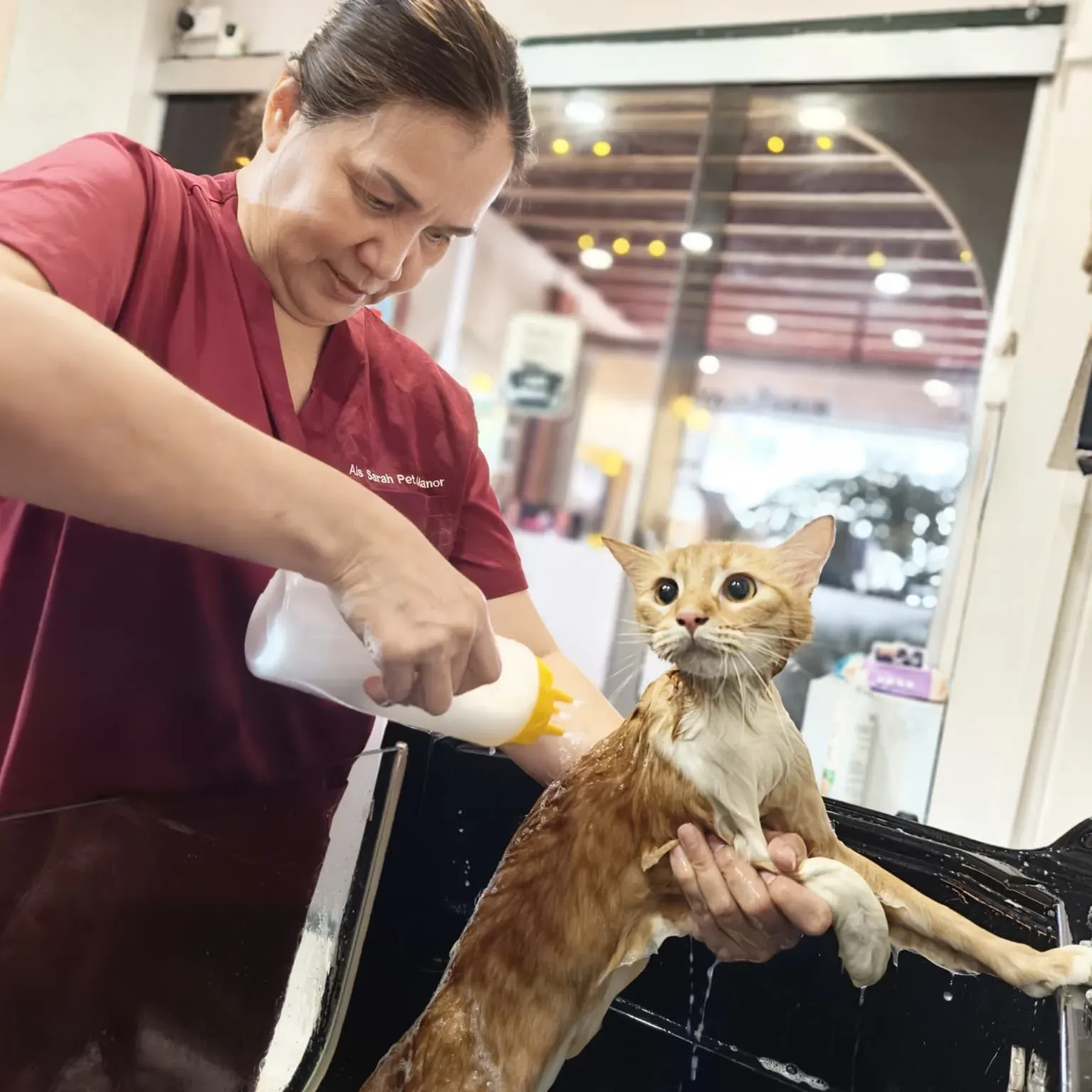
Most owners bring a matted cat in apologising. The mats crept up over a busy month, or the cat stopped tolerating the brush, or nobody realised how much was going on under a coat that looked fine from above. We say the same thing every time: you are here now, and that is the part that matters. What we would like you to know is why we take mats seriously, because it is not about tidiness.
What a mat looks like from the grooming table
Everything in this section is a groomer’s description of what we handle every day. It is not veterinary literature, and we would rather say so than borrow authority we do not have.
A mat, as we see it form, starts when loose shed hair fails to fall out of the coat and instead tangles around the hairs still growing. Every movement tightens it. What began as a soft knot behind the elbow becomes a dense pad, and because it is anchored in hair still attached to the cat, it tugs at the skin when she walks, stretches or jumps.
Left long enough, mats join up. That is what groomers call pelting, where the coat forms a single stiff sheet lifted slightly off the body. By that stage we cannot get a comb between coat and skin at all, and from what we can tell, neither can the cat’s own tongue.
Why we say it hurts
This is our professional observation too, and it is the heart of the article, so we will label it plainly rather than reach for a study that does not say this.
We can see the difference between a cat with a comfortable coat and a cat carrying mats within seconds of them arriving. Matted cats hold themselves differently. They flinch when a mat is touched, they twist away from a hand on the back or the belly, and they often protest at being lifted, which is usually the moment several mats move at once. Owners frequently tell us afterwards that their cat became noticeably friendlier and more playful once the mats were gone, and we hear that far too often to shrug it off.
We also see what the skin looks like when a pelt comes off. Skin that has been sealed under a mat is often pale, damp and tender, sometimes with debris or moisture trapped against it. That is the strongest argument we can make for not waiting.
When it stops being a grooming problem
Skin has its own limits, and this is where a groomer hands over. The Cornell Feline Health Center notes that skin problems in cats are common and have many possible causes, including parasites, allergies, nutrition and infections, and that unresolved or recurring skin issues warrant veterinary diagnosis.
So if the skin under or around a mat is red, broken, weeping or sore, or if the same irritation keeps returning after the coat is sorted out, your cat needs a vet rather than another bath. We are not veterinarians. When something needs a vet, we tell you.
Preventing mats is mostly two habits
The first is brushing, and the honest version is that brushing has to reach the skin. In our experience a brush that only skims the top of a long coat leaves the underlayer untouched, which is exactly where we find mats: the armpits, the belly, behind the ears, the ruff and the back of the thighs. A few short sessions a week beat one long wrestle a month, and they double as a check, because you feel a knot forming long before you can see it.
The second is not leaving too long between professional sessions. In our groomers’ experience, leaving too long between sessions is the main cause of pelted matting. As a general guide we suggest short coats every six to eight weeks and long coats every four to six, with senior, overweight and heavy-shedding cats at the shorter end. If you would like the full picture on cadence, we set it out in our piece on why indoor cats get greasy, where the same schedule applies.
When a shave is the kind option
Owners sometimes brace themselves for bad news when we suggest a shave down. It is worth saying that in our judgement, for a genuinely matted coat, clipping is usually the gentler path, because working a tight mat out strand by strand means hours of pulling on skin that is already sore.
We recommend cuts only where they are genuinely needed, and severe matting is the clearest case. For nervous or anxious cats we would rather do a good bath and a thorough comb-out than a styling cut. Throughout, we work at the cat’s pace, allow breaks, and pause or stop if a cat is in severe distress. That is not a limitation on the service. It is the service.
If you want to see what actually happens to a matted coat in the studio, our groomers walked through it on the blog, in cat grooming for matted fur.
Educational, not veterinary advice; see a vet for diagnosis and treatment.